Business leaders have offered a cautious and mixed response to the federal budget for fiscal year 2026-27, stressing that high energy tariffs, elevated tax rates and persistent policy uncertainty continue to discourage investment and slow economic growth.
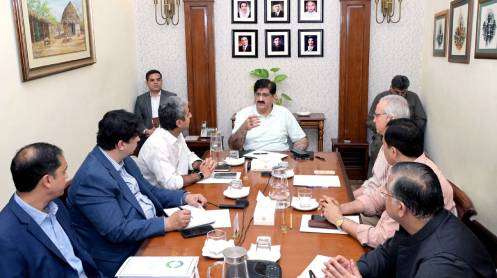
The assessment came during a special Geo News post-budget transmission on Sunday, where economists and prominent business figures reviewed the government’s proposals and their potential impact on the economy and the public. The programme was hosted by senior anchor Shahzeb Khanzada and featured Arif Habib, Muhammad Ali Tabba, Zeelaf Munir and Ziad Bashir.
Arif Habib expressed scepticism over the budget’s ability to stimulate meaningful investment and job creation, arguing that high energy costs and heavy taxation remain key barriers. He reiterated the long-standing demand of the business community for the abolition of the super tax and significant reduction in energy prices to improve competitiveness and boost exports.
While acknowledging that the government had engaged stakeholders during the budget-making process and provided some relief to salaried individuals and exporters while keeping the IMF programme on track, he questioned the pace at which economic conditions could improve.
Ziad Bashir noted that although the government had taken steps to stabilise the economy under difficult circumstances, structural weaknesses continue to hinder growth. He pointed out the extremely low share of rail freight in cargo movement and criticised the over-reliance on road infrastructure, alongside gaps in shipping and port connectivity. He warned that inconsistent policies were damaging investor confidence.
“If we do not fix the fundamentals, how will we compete globally?” he remarked.
Zeelaf Munir emphasised the need for a long-term, coherent development strategy and greater focus on innovation-driven growth. She said the private sector is willing to invest but requires clarity and policy consistency to plan ahead.
Meanwhile, Muhammad Ali Tabba highlighted inflation as a major burden on low-income groups, arguing that economic challenges stem largely from policy shortcomings. He urged policymakers to prioritise export-led growth in sectors where Pakistan holds comparative advantages.
Overall, the business community called for structural reforms, lower taxation, and reduced energy costs to revive investment and strengthen economic competitiveness.